A motion picture that does not exist yet
SANTA
ORIGINS
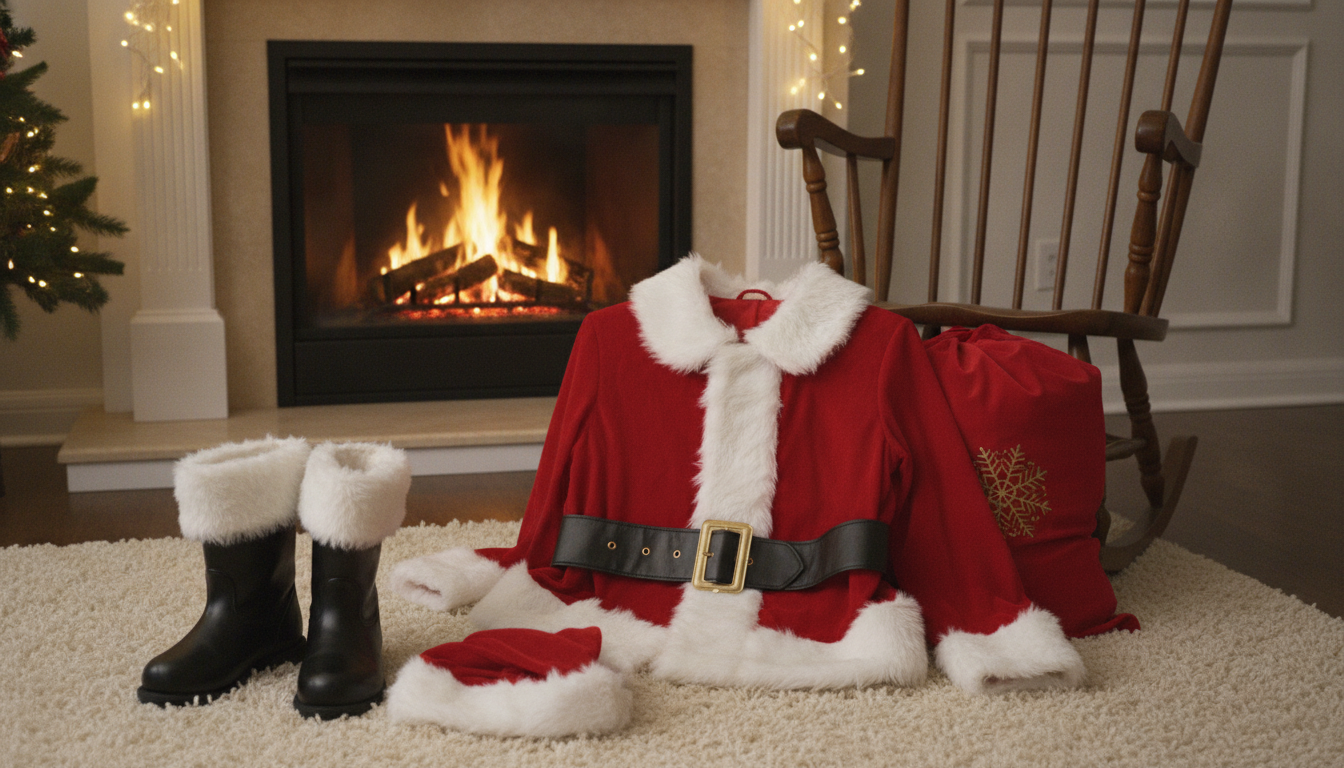
Father Christmas, told the way the story was always meant to be told: a gentle giant who loves the whole sleeping world, and crosses it every winter to leave a little joy at the foot of every bed. No one ever sees him. That’s the magic.
A bedtime story that gets to stay a bedtime story.
You don’t end a children’s story by leaning over the bed and whispering what really happened. You let them have the happy.
Every story has a shadow. This one’s is real — but we never make this film carry it. We latched it, on purpose, onto its twin: The Real Thing — a gloriously unapologetic supervillain movie set in an alternative history, which takes the whole of the dark, openly, and is having the time of its life with it.
The debt is paid, in full, over there. So this one gets to live entirely in the light — exactly the way a Christmas story should.
That’s a Simul-Make.
The Logline
The kindly old man at the top of the chimney has a beginning, and it is wonderful. Long before the shopping centres and the cola adverts, there was simply someone who could not stand the thought of a child waking on a cold morning to nothing at all — and who quietly decided to do something about it, every winter, forever. This is the story of where all that giving came from: the gentle giant, the long night, the impossible kindness done in secret and never claimed. From the first frame to the last, it is a film you could sit any child in front of on Christmas Eve and tuck them in happy.
Cold Open — “The Round”
We see, but barely hear. An enormous, careful figure sets the gifts down with a tenderness that is almost unbearable to watch — squaring a box to the hearth, smoothing a ribbon flat, standing a beat too long at the foot of a child’s bed, just to be sure the smile lands in the morning.
At the door he pauses, the way you do when you love a room and have to leave it. Then he is gone — out into the snow before the milk goes cold — and the house is warm, and the morning is coming, and the child will wake to find that the magic was real, and they only just missed it.
Why he gives
He doesn’t give to be thanked — he is never even seen. He gives for the oldest, simplest reason there is: somewhere a child is asleep, the morning could be a little kinder, and he is the one who decided to make it so. The whole warmth of the film is that the kindness has no angle. It is just kindness, the size of the world, carried out one quiet house at a time — and a giant who would rather cross the whole earth in the cold than let a single dawn arrive empty.
The wonder is in the secret
The magic of Santa was never the sleigh or the list — it’s that he comes while you sleep, leaves the world a little brighter, and is gone before you can thank him. The film lives entirely in that: the hush of the house, the gift that wasn’t there last night, the footprints already filling with snow. Children get pure wonder. Grown-ups get the loveliest feeling there is — that someone, somewhere, is quietly being kind for no reason but love. Everybody leaves warmer than they came in.
▣ The latch ▣
Where the dark went — the Simul-Make
This is one half of a Simul-Make: two films, released together, sharing a single hinge, each one whole on its own — and together revealing a third thing neither could say alone. The other half already exists — The Real Thing, a gleeful supervillain-company comedy set in an alternative history, written before this one.
The hinge is a single object: the red suit. One film keeps it spotless. The other wears it as a mask.
| SANTA ORIGINS — keeps the light | THE REAL THING — keeps the dark |
|---|---|
| The suit is pure: warmth, wonder, the kindest red in the world. Not one thread of the dark touches it. | The same suit becomes the villain’s costume: every ounce of the shadow, worn openly, played gloriously to the hilt — and laughing about it. |
| A children’s bedtime story, told entirely in the light. | An adults’ comic-book villainy, told entirely out loud. |
That is the trick, and the kindness, of a Simul-Make. Because the twin carries the whole of the dark — openly, willingly, for laughs — this film never has to. The shadow is paid in full next door, so the children’s story gets to stay a children’s story. The third thing, which neither film holds alone: that the same red suit can be, at once, the world’s kindest gift and its most gloriously unapologetic villainy — and that letting each film be wholly one thing is only possible because its twin is wholly the other. The Real Thing keeps the dark. Santa Origins keeps the light. On purpose.
A Word From The North Pole Office Of Goodwill & Reassurance
This is a make-believe Christmas story for a film that does not exist yet — a warm one, the kind you’d happily put a child in front of. There is no real company in it and no claim about anyone living or dead. The kindly old man at the foot of the chimney is, and has always been, exactly as lovely as he looks.
He has always loved you. That part was never in any doubt.
The world has been waiting for a family film that means something on Christmas morning.
Here is one. It is free.
Hollywood can only seem to remake and re-prequel what already exists. So here is something that does not exist yet — fully formed, no strings, no author to pay. Take the origin, take the gentle giant, take the red suit, and make the warmest, most wonderful Christmas film you can.
And make it without fear. The shadow every story carries has, in this case, already been paid — by its twin. So you are free to keep this one entirely in the light, with nothing held back and nothing to hide. That freedom is the whole gift of a Simul-Make.
Oh — one last thing
This was a SIMUL-MAKE move. Somewhere out there is its twin — the same red suit, every ounce of the dark this story refuses to carry, worn openly and played for glory. One film keeps the light. The other keeps the dark. On purpose.
▣ See the twin — THE REAL THING the same red suit · all the dark, worn openly